Marrakech has a subtropical semi-desert climate: mild days and cold nights in winter, very hot and dry summers. On the 1991-2020 normals, average highs run from 19.2 °C in January to 37.7 °C in July, with just 280 mm of rain a year spread over 59 days. The figure most visitors underestimate is the day-to-night swing, which often exceeds thirteen degrees.
The month-by-month table
These are thirty-year averages. Read them as a planning frame, not a forecast.
| Month | Low | High | Rain | Rain days | Sun / day |
|---|---|---|---|---|---|
| January | 5.9 °C | 19.2 °C | 30 mm | 8 | 7 h |
| February | 7.7 °C | 20.8 °C | 40 mm | 8 | 7.5 h |
| March | 10.4 °C | 23.7 °C | 40 mm | 8 | 8 h |
| April | 12.4 °C | 25.8 °C | 40 mm | 7 | 8.5 h |
| May | 15.1 °C | 29.5 °C | 25 mm | 5 | 9.5 h |
| June | 18.0 °C | 33.7 °C | 4.5 mm | 1 | 10.5 h |
| July | 20.6 °C | 37.7 °C | 1.2 mm | 1 | 11 h |
| August | 21.0 °C | 37.4 °C | 3.4 mm | 1 | 10 h |
| September | 18.1 °C | 32.4 °C | 5.9 mm | 3 | 9 h |
| October | 15.3 °C | 28.4 °C | 25 mm | 6 | 8 h |
| November | 10.5 °C | 23.3 °C | 40 mm | 7 | 7 h |
| December | 7.4 °C | 20.2 °C | 30 mm | 6 | 7 h |
Climate normals for 1991-2020 at the Marrakech station, published by Climates to Travel. These are thirty-year averages: any single year can depart from them noticeably. Properties at the foot of the Atlas sit two to three hundred metres higher and are routinely two to four degrees cooler at night.
Our three houses sit in the medina, the Palmeraie and at the foot of the Atlas, at different altitudes: the season that suits you partly decides which one will.
Discover our three houses Ask about a private hire
Three things the table does not tell you
The day-to-night swing decides what you pack
Marrakech sits at 460 metres and far from the sea. In January there are thirteen degrees between the low and the high; in July, seventeen. In practice a 24 °C March afternoon ends as a 10 °C evening on a terrace. This is why travellers who pack only for heat spend their evenings indoors. A warm layer earns its place in the bag nine months of the year, even when the afternoons feel like summer.
Rain arrives as downpours, not drizzle
At 280 mm a year, Marrakech is dry: London gets more than double. But those 280 mm come concentrated, as thunderstorms or heavy showers, often late in the day. A rainy day in November is rarely a lost day: it is usually one difficult hour inside a workable day. The medina alleys do change character fast, though, and mountain tracks turn slippery.
A southerly wind can override everything
The chergui, descending from the Atlas, lifts the thermometer suddenly. That is why January holds a record of 30.1 °C and April a record of 38 °C. The same wind can carry sand and dust and cut visibility towards the peaks.
Records from the same 1991-2020 series. They describe what happened once, not what to plan for.
What each season changes for a stay
Winter, December to February
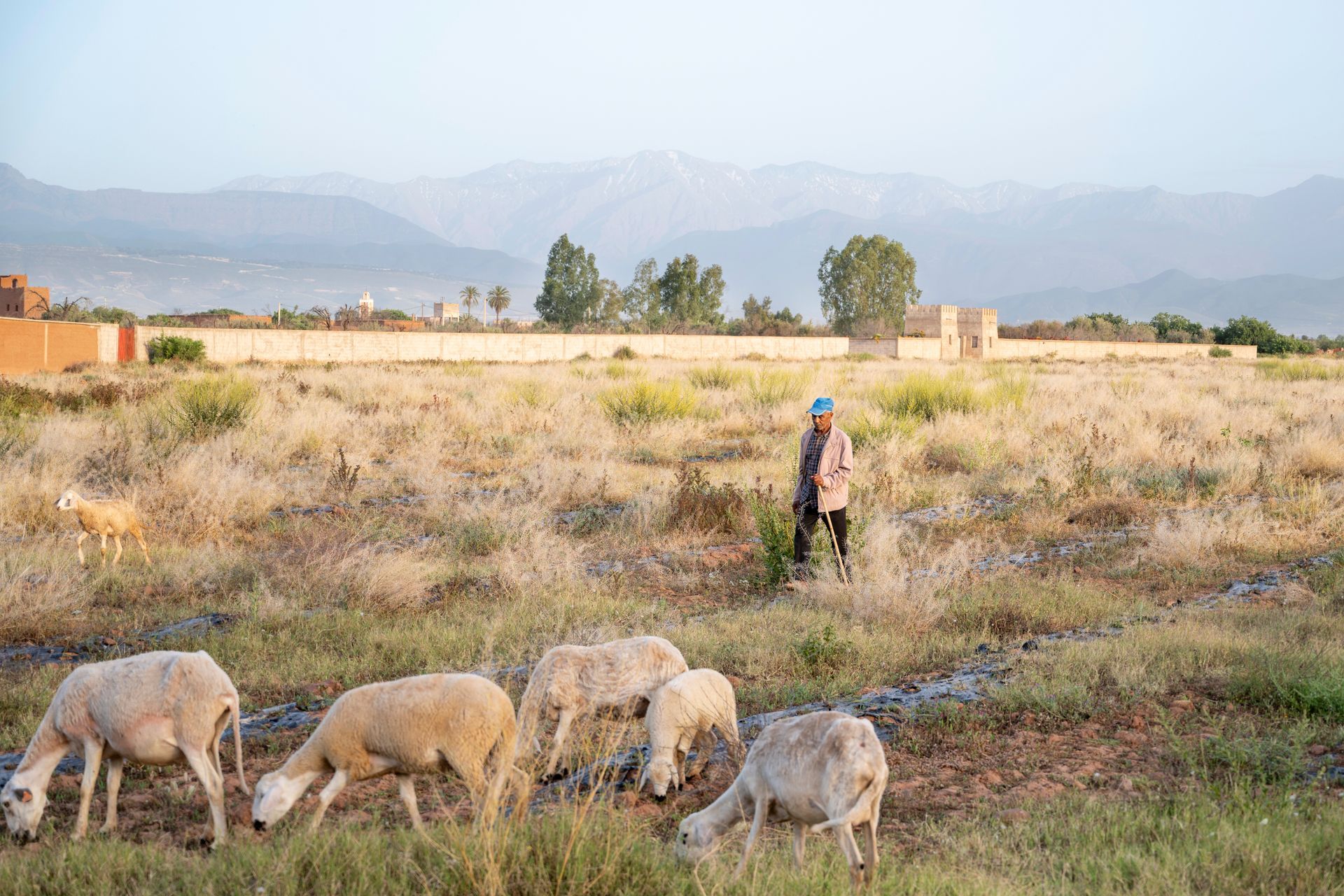
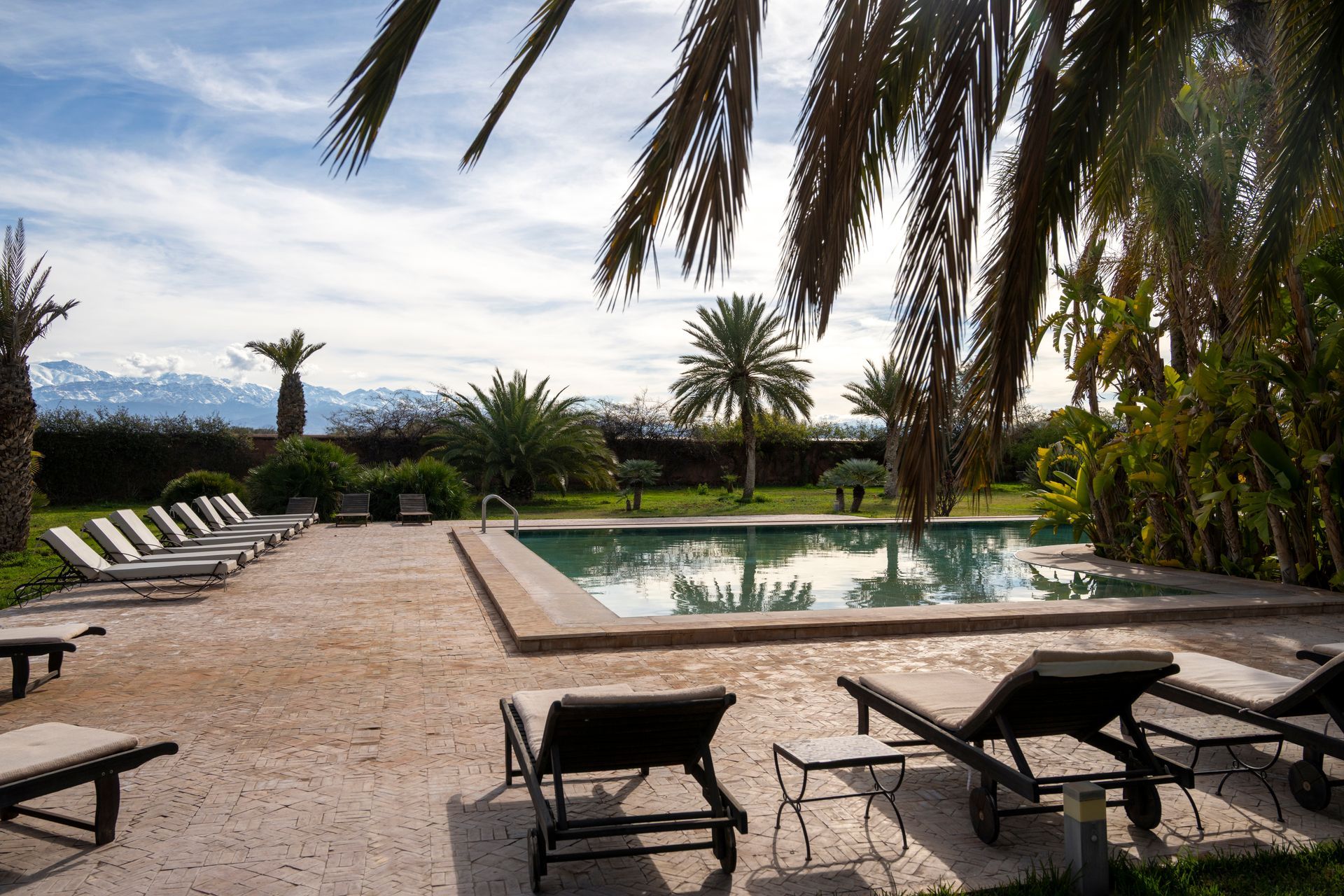
Mild days of 19 to 21 °C, nights that regularly drop below 5 °C and occasionally touch freezing. Seven hours of sun a day, which is still a lot. The Atlas peaks are snow-covered and visible from the city: this is the best time of year to photograph them. An unheated pool is unusable. See Marrakech in December and Marrakech in January for the detail.
Spring, March to mid-June
The best window for most trips. March and April give 23 to 26 °C by day, with cool nights still and a real chance of showers, 40 mm over eight days in March. May moves up to 29.5 °C and rain becomes rare, though spikes to 38 °C happen. Marrakech in April covers the most requested month.
Summer, mid-June to mid-September
Very hot and very dry: 37.7 °C average high in July, with runs above 45 °C. The city is not organised against the heat so much as around it: out early, home at midday, out again around 6 pm. Nights stay breathable at 16 to 21 °C. This is the season when a pool and dense shade matter more than location.
Autumn, mid-September to November
The second good window. September stays hot at 32.4 °C with almost no rain. October falls to 28.4 °C, which is often the best combination of the year: warm without excess, nights at 15 °C, pool still pleasant. November tips over, with 23.3 °C by day and 40 mm of rain.
Choosing where to stay by season
Climate changes more than your packing list, it changes which address suits you.
| Season | What matters most | Suited address |
|---|---|---|
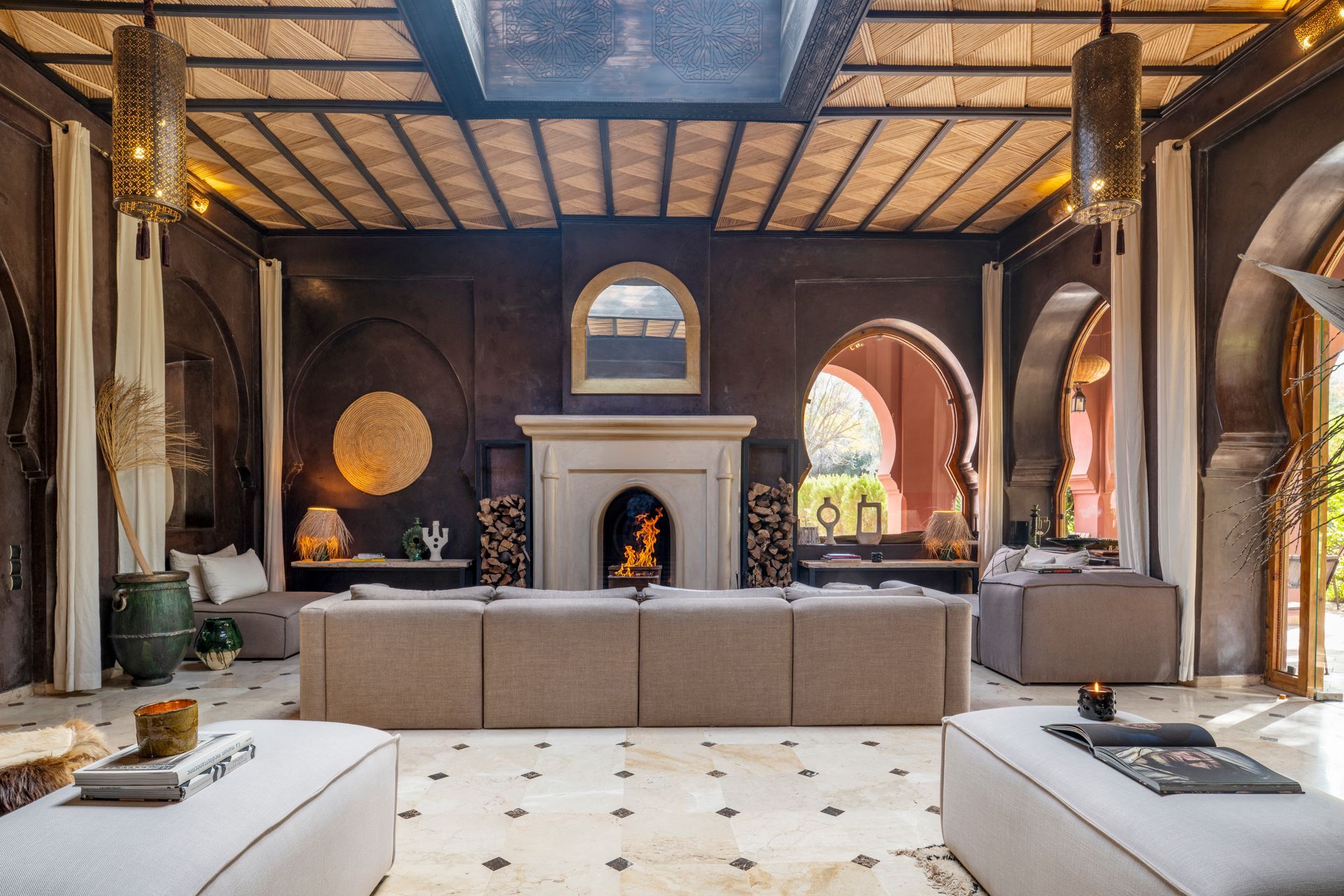
| December-February | Indoor warmth, fireplace, morning sun | Riad in the medina, or a house with heated salons |
| March-May | Terrace and garden, easy access to the city | Palmeraie or medina depending on the plan |
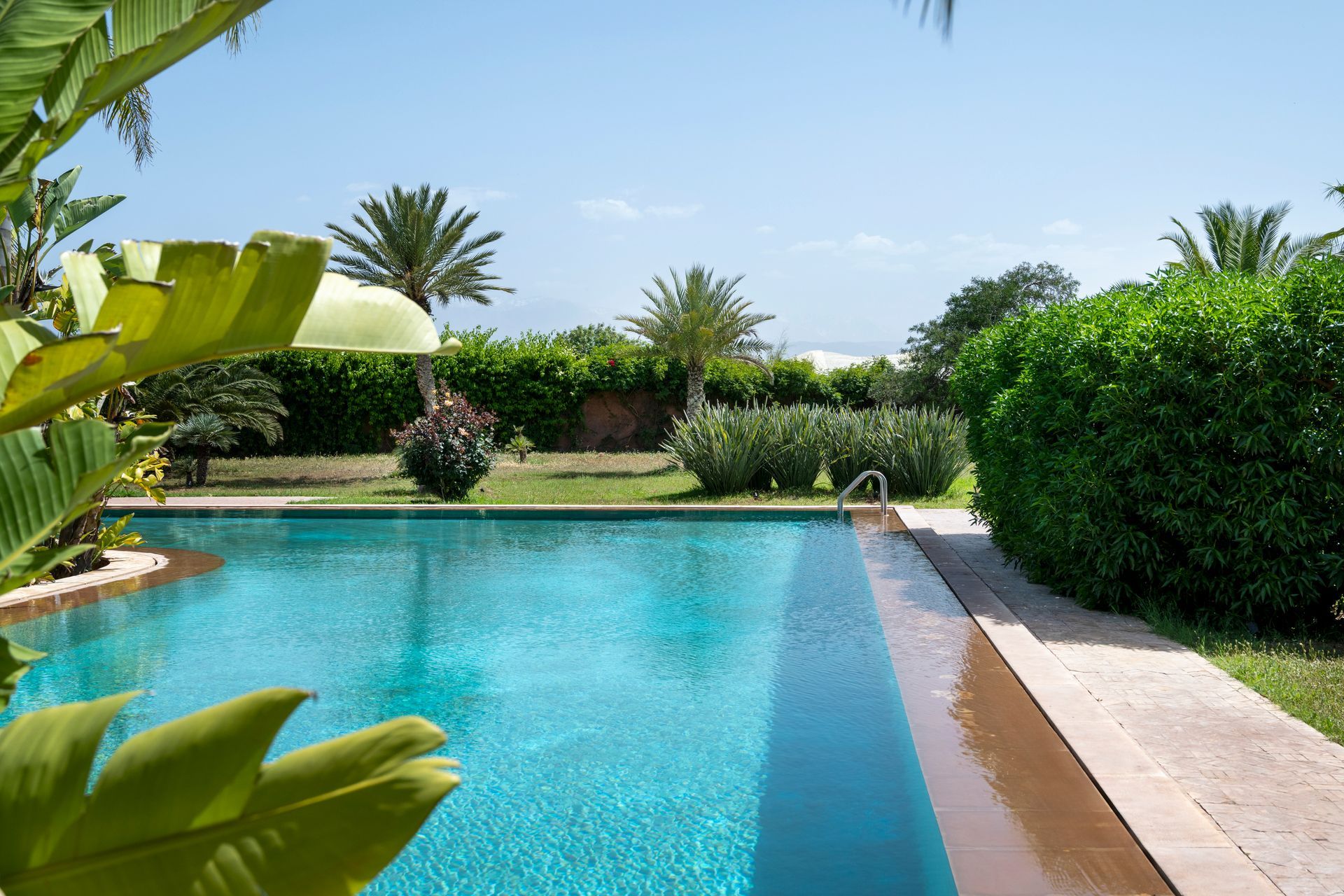
| June-August | Pool, deep shade, ventilated nights | Palmeraie or the foot of the Atlas |
| September-November | Versatility, Atlas views | All three work |
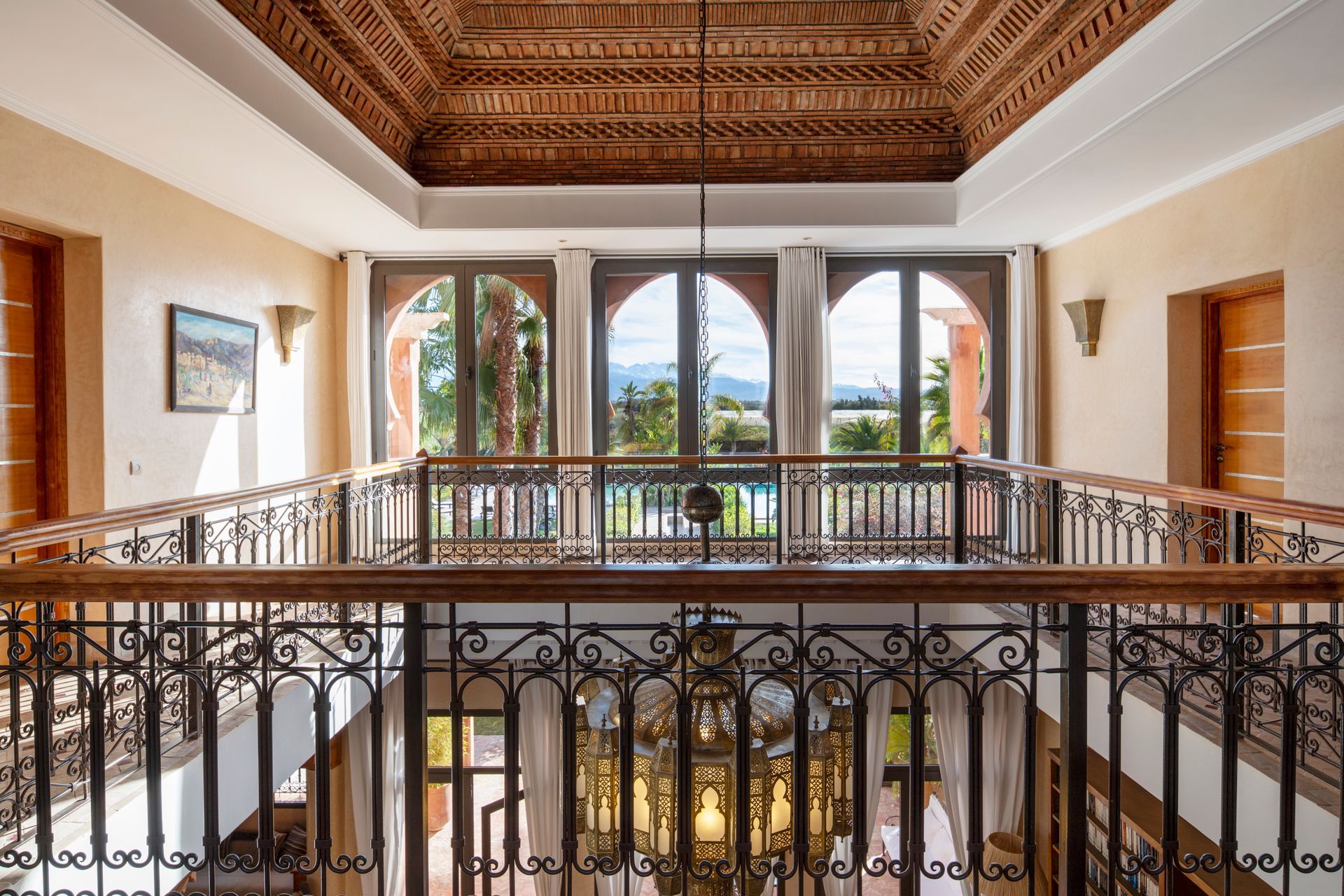
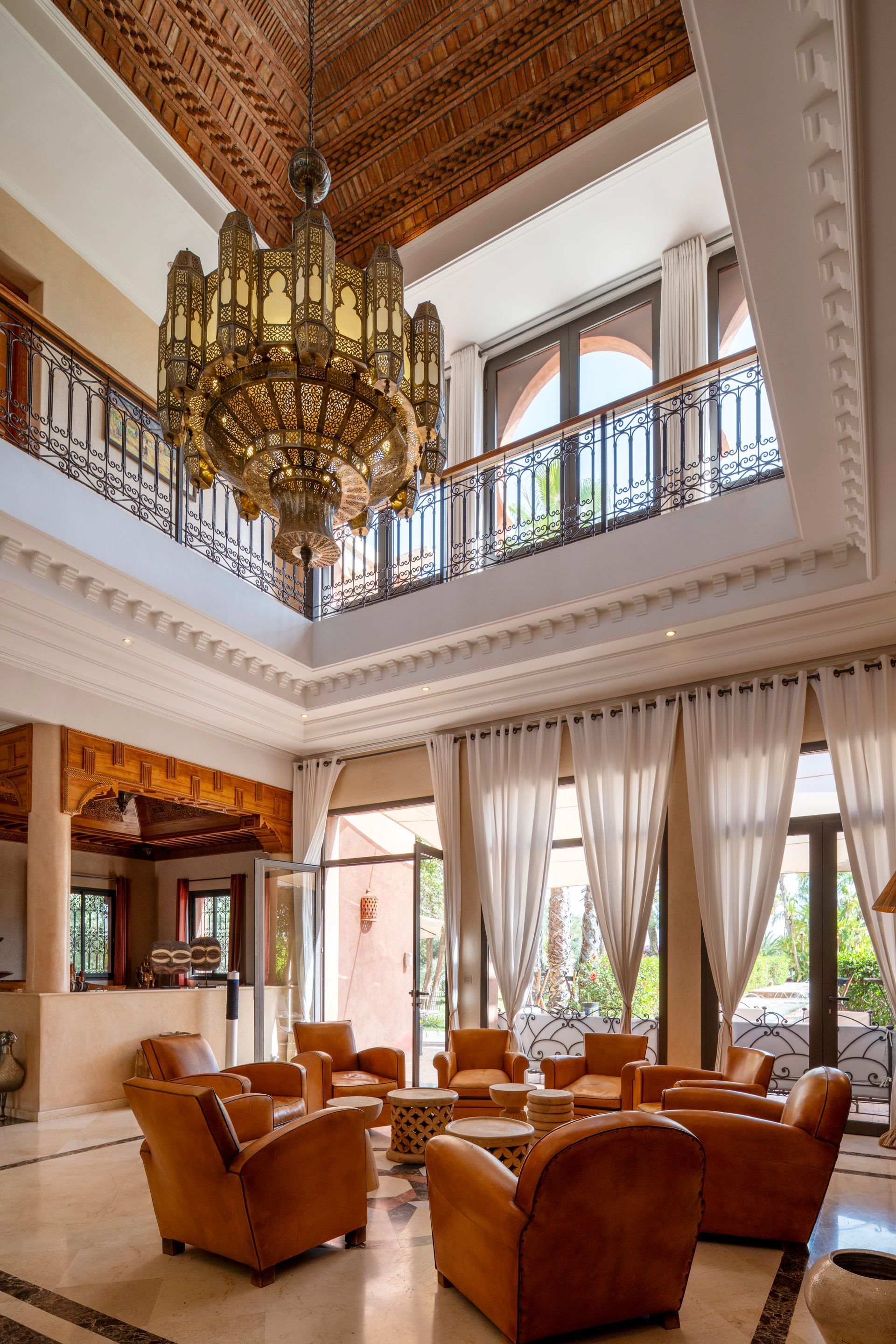
Our three houses do not answer the same seasons. Bab Akoul Medina is the most practical when days are short and you want to walk. Bab Akoul Palmeraie makes most sense when the pool becomes the centre of the day. Bab Akoul Atlas, higher up, is the coolest of the three in summer and the most striking in winter when the peaks turn white. The guide to Marrakech's areas compares them in detail.
See Bab Akoul Palmeraie See Bab Akoul Atlas See Bab Akoul Medina
The practical calendar on one page
- You want to walk the medina and sightsee: aim for March, April, October.
- You want the pool and little else: May, June, September.
- You want snow-capped mountains and low rates: January, February.
- You are hosting an event with a meal outdoors: April-May or late September-October.
- You are travelling with children or older guests: avoid July and August.
For an event the climate constraint is tighter than for a holiday: a dinner laid outdoors tolerates neither 38 °C nor a thunderstorm. The Marrakech wedding venue guide and the Events and stays page cover the windows worth targeting.
Enquire about a private hire See exclusive offers
What about day trips?
Altitude changes everything. The Ourika Valley, an hour's drive away, runs five to eight degrees cooler than the city: an advantage in July and a drawback in January, when it can freeze higher up. The Ourika Valley day trip guide gives distances and walking times. When it is too hot to be outside, the hammam and spa guide explains how to build an indoor half-day. The three-day Marrakech itinerary schedules sightseeing around the bearable hours.
Marrakech weather: frequently asked questions
What is the hottest month in Marrakech?
July and August, effectively tied: average highs of 37.7 °C and 37.4 °C, with a daily mean of 29.2 °C in both. On the 1991-2020 series the temperature reached 49.6 °C in July 2012.
What is the coldest month?
January, averaging a 19.2 °C high and a 5.9 °C low. The coldest nights typically fall to around 2 °C, and the series low is -3 °C in January 2005.
Does it rain much in Marrakech?
No. About 280 mm falls each year over 59 days, against more than 600 mm in London. Rain concentrates between October and May and arrives as short downpours rather than grey days. From June to September it barely rains at all.
Can you swim in Marrakech in winter?
Not in an unheated pool. With nights at 5 to 7 °C and seven hours of sun, the water stays cold from December to March. If swimming matters at that time of year, confirm with the property that the pool is heated before booking.
When are the Atlas Mountains snow-covered?
Usually December to March, sometimes from November and into April on the highest peaks. They are then visible from Marrakech itself and from terraces south of the city.
Do I need a jacket in summer?
A light layer is enough but genuinely useful: June and September nights fall to 14 or 15 °C, twenty degrees below the afternoon. In winter a proper warm jacket is essential.