Moroccan cooking does not reduce to tagine and couscous. Couscous is traditionally eaten on Fridays, tagine names both a dish and the vessel it cooks in, and the best things you eat on a trip are often the simplest: bread straight from the neighbourhood oven, a tomato salad with cumin, a pastilla made that morning.
Ten dishes worth knowing
| Dish | What it is | When to eat it |
|---|---|---|
| Tagine | Slow-cooked stew, named after the clay pot | Lunch or dinner, everywhere |
| Couscous | Steamed semolina, vegetables, meat | Traditionally on Fridays |
| Pastilla | Sweet-savoury pastry, pigeon or chicken | As a starter, or a light main |
| Harira | Tomato, lentil and chickpea soup | Evenings, especially winter and Ramadan |
| Tanjia | Meat confit in a jar, a Marrakech speciality | Lunch, order the day before |
| Mechoui | Whole roast lamb | Lunch, in the mechoui alley |
| Briouates | Small stuffed pastries | With drinks or as a starter |
| Zaalouk | Spiced aubergine dip | As a salad, with bread |
| Msemen and baghrir | Flaky flatbreads and thousand-hole pancakes | Breakfast, with honey |
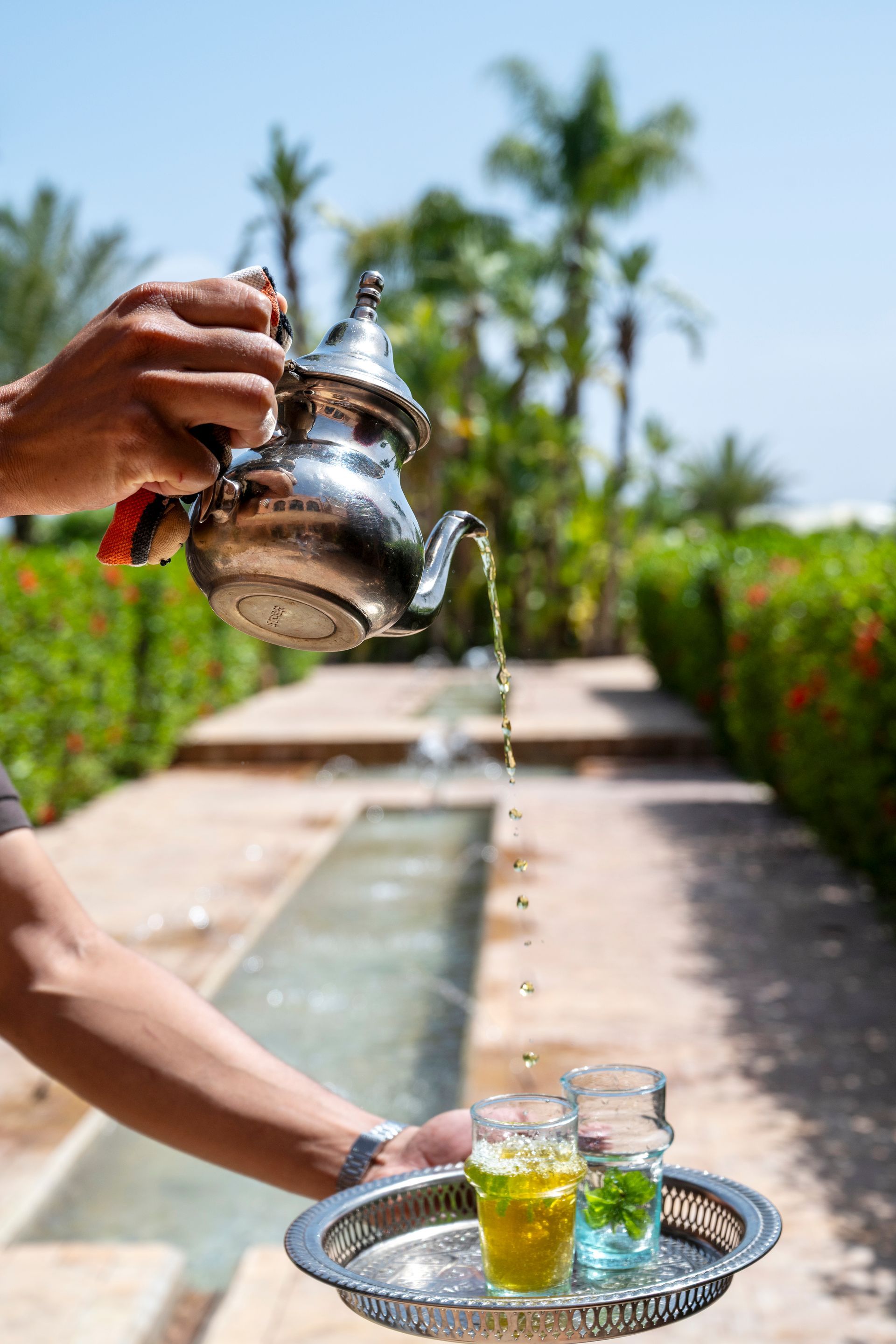
| Mint tea | Green tea, mint, sugar | All day, and on arrival everywhere |
Tanjia deserves a special mention: it is the dish of Marrakech and of no other city. Meat, preserved lemon, cumin and saffron in a clay jar, cooked slowly in the ashes of the neighbourhood hammam. It is often ordered in advance, and many visitors leave without tasting it.
Discover our three houses Request a private-hire quote
Where to eat, by type of place
The Jemaa el-Fna stalls
Theatre more than gastronomy, but some stalls are excellent. The rule is simple: eat where there is a crowd and turnover, not where you are called loudest. Ask the price before sitting down. The Marrakech nightlife guide explains how the square works.
Neighbourhood restaurants
The best value in the city, and often the best cooking. Little decor, a short menu, sometimes no menu at all. This is where you eat harira and the tagine of the day for a few dozen dirhams.
Riad tables
Often the most interesting for well-executed traditional cooking, because the cook does few covers and shops in the morning. Many are open to non-residents by reservation.
Gueliz restaurants
International cooking, reinterpreted Moroccan dishes, faster service and wine available. The right choice when you want something else, which happens after four days of tagine.
What to know before you order
- Bread replaces cutlery in traditional cooking. You eat with the right hand, using thumb, index and middle finger.
- Tagine portions are for one person, but couscous is often served for two or more. Ask first.
- Dishes are rarely hot-spicy. Chilli arrives separately as harissa, for you to judge.
- Vegetarians eat very well: zaalouk, taktouka, vegetable tagine, lentils, and a remarkable range of cooked salads.
- Tea is sweetened by default, often heavily. You can ask for it lightly sweetened, and nobody minds.
- Hours are late: lunch around 1 or 2 pm, dinner from 8 pm.
Hygiene: the real rule
The most common health problem on a trip is digestive, and it rarely comes from where you expect. Established restaurants and riad tables are not an issue, ice and raw vegetables included. Nor are high-turnover stalls: what moves fast is fresh. Empty stalls, food kept lukewarm for hours and juices pressed in advance are the actual risks. Drink bottled water. The Marrakech safety guide covers this further.
Cooking rather than eating out
On a group stay, eating at the house changes the shape of the day: no booking for twelve, no journey home, and the option of eating when you are hungry rather than when service starts. A cook preparing tanjia or mechoui for your table is also one of the better things you can take home.
That is what we arrange as part of a private hire: meals prepared on site, menus agreed in advance, and a cookery lesson if you want one. See the private villa guide and the Events and stays page. The Marrakech with kids guide covers children, who are usually easier to feed at home.
Enquire about a private hire See exclusive offers
What to take home
Loose spices keep badly and are everywhere: go instead for saffron, a good merchant's ras el-hanout, and culinary argan oil, which is not the same as the cosmetic kind. Olives and preserved lemon travel well in jars. Gunpowder green tea is cheap and good. The souks and haggling guide explains how to buy without being taken, and the neighbourhood comparison where to stay depending on whether you want to cook or be cooked for.
See Bab Akoul Palmeraie See Bab Akoul Atlas See Bab Akoul Medina
Frequently asked questions about Moroccan food
What should I eat in Marrakech?
Tagine and couscous of course, but above all tanjia, the city's own speciality, plus pastilla, harira and mechoui. Msemen at breakfast and cooked salads such as zaalouk are often the best surprises.
What is tanjia?
The signature dish of Marrakech: meat, preserved lemon, cumin and saffron cooked slowly in a clay jar, traditionally in the ashes of the neighbourhood hammam. It is often ordered the day before.
Can you eat vegetarian in Marrakech?
Very easily. Zaalouk, taktouka, vegetable tagine, lentils and a wide range of cooked salads are traditional dishes, not adaptations.
Is Moroccan food spicy?
Rarely hot. It is aromatic, with cumin, saffron, ginger and ras el-hanout. Chilli arrives separately as harissa, for you to add.
Is it safe to eat at the Jemaa el-Fna stalls?
Yes, if you choose stalls with a crowd and turnover rather than the ones calling loudest. Ask the price before sitting down.
When do Moroccans eat couscous?
Traditionally on Friday, the day of the main prayer, served with family afterwards. Tourist restaurants offer it every day.