Marrakech is a safe destination for the overwhelming majority of travellers. The real risk is not violence, which is rare towards visitors, but the opportunistic scam: fake guides, prices quoted after the fact, detours into a shop. These are financial annoyances rather than dangers, and five or six simple habits neutralise them.
What actually happens, and what almost never does
Telling the two apart is the only way to travel relaxed. Here are the situations you genuinely meet, ranked by frequency.
| Situation | Frequency | What it costs | How to avoid it |
|---|---|---|---|
| Price quoted afterwards | Very common | 20 to 200 dirhams | Ask the price before, not after |
| Fake guide offering help | Common | 50 to 200 dirhams | Decline politely once, then stop responding |
| Forced detour into a shop | Common | Lost time | State your destination and do not deviate |
| Taxi with no meter | Common | Double the fare | Agree the price before getting in, or insist on the meter |
| Pickpocketing in a crowd | Occasional | Whatever is in your pocket | Bag closed and in front of you on Jemaa el-Fna |
| Physical assault | Rare | Not applicable | Avoid empty alleys after midnight |
This guide describes our daily experience of the city and the habits that help. For the official position, consult your own foreign ministry's travel advice, which is authoritative and kept up to date.
In other words: your main risk is paying too much. That is irritating, not dangerous. And it is solved by asking a question beforehand, not by distrusting everyone.
Discover our three houses Ask about a private hire
The six habits that change everything
- Ask the price before any service: taxi, carrying bags, a photo, a tea, anything. Once the thing is done you have no leverage left.
- Decline once, clearly, then stop responding. Keeping the conversation going is what prolongs the approach.
- Do not follow anyone who tells you your street is closed, that the square is the other way, or that a Berber festival is on today.
- Keep your bag in front of you in the crowd on Jemaa el-Fna and in the souks at peak times.
- Ask your accommodation to order the taxi rather than hailing one: the fare is known in advance and the driver is identified.
- Note the name of your derb and a visible landmark. The alleys look alike and GPS loses signal in them.
Women travelling alone
This is the question we are asked most, and the honest answer is nuanced. Marrakech is very walkable solo: many women travellers do it without incident. You should expect regular street approaches, more persistent than in a European city. They are verbal and they stop when you do not respond.
What helps in practice: walking with purpose even when lost, avoiding empty alleys after the shops close, taking an ordered taxi home rather than walking late at night, and choosing accommodation you can leave and return to without crossing a maze. The guide to Marrakech's areas shows which areas are easy to walk in the evening.
Health, water, and the stay's real risk
The most common health problem is neither a tropical disease nor an assault: it is an upset stomach, and heat exhaustion in summer.
- Water: drink bottled water. The tap water is treated but your gut is not used to it.
- Ice and raw vegetables: no concern in established restaurants and hotels, more of a gamble at a street stall.
- Street food: busy stalls turn over fast, which is a good sign. Empty stalls are less so.
- Heat: in July and August the average high exceeds 37 °C. Summer's real risk is dehydration, not your stomach. See the month-by-month weather guide.
- Pharmacies: plentiful, competent, and many medicines are dispensed without prescription.
Money, payments and small notes
The dirham cannot be bought abroad: you change money on arrival. Cash machines are everywhere in the city and at the airport. Cards work in hotels, restaurants and larger shops, but not in the souks, not in petit taxis, and not for tips. Always keep 20 and 50 notes: paying for a 30-dirham service with a 200 note tends to produce a miraculous absence of change.
What the choice of accommodation changes
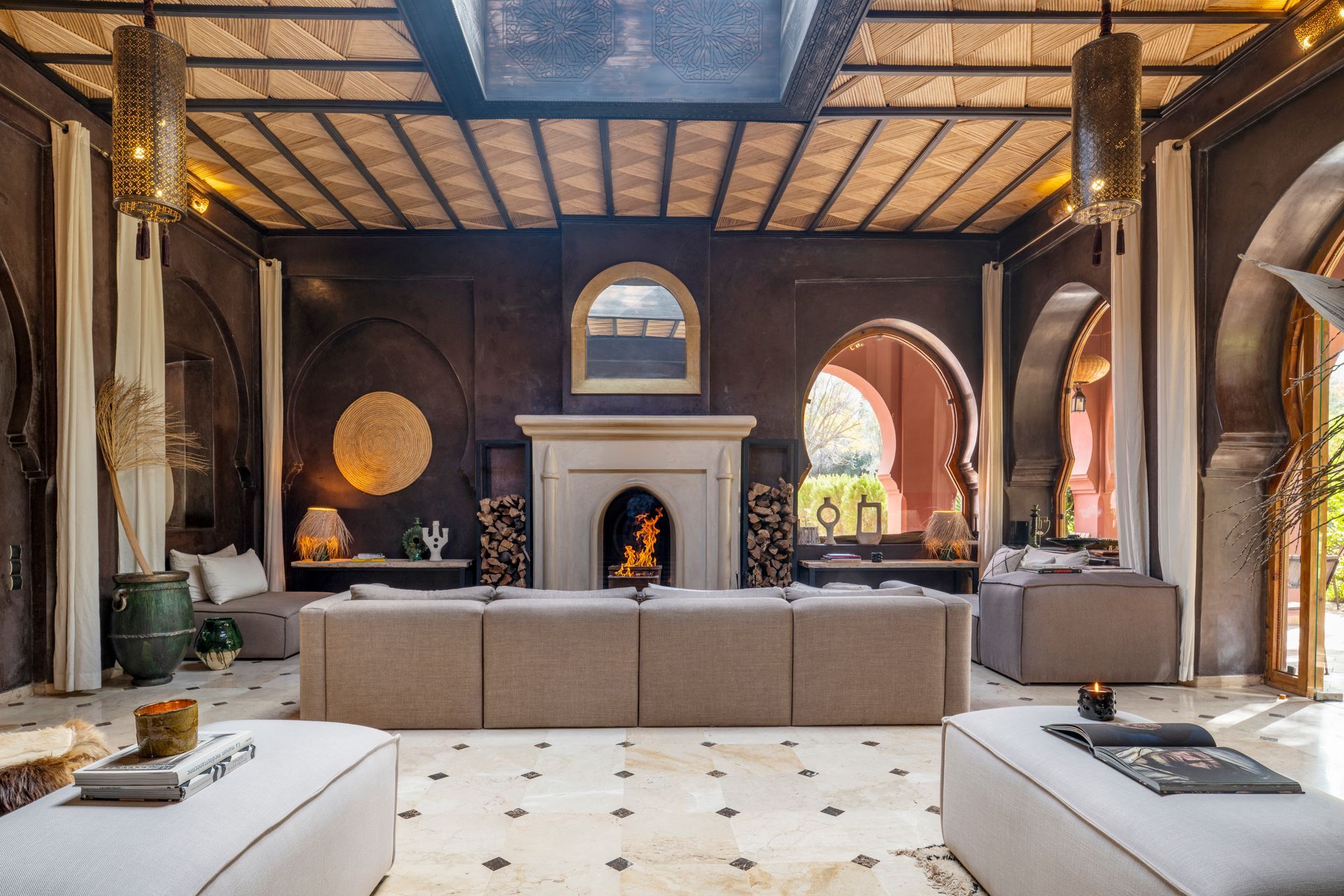
Most of the situations above happen between the hotel door and your destination. A house with staff on site removes much of the subject: the taxi is ordered, the fare is known, someone walks you to the end of the alley on the first evening, and restaurant bookings are made by people who know what a meal should cost.
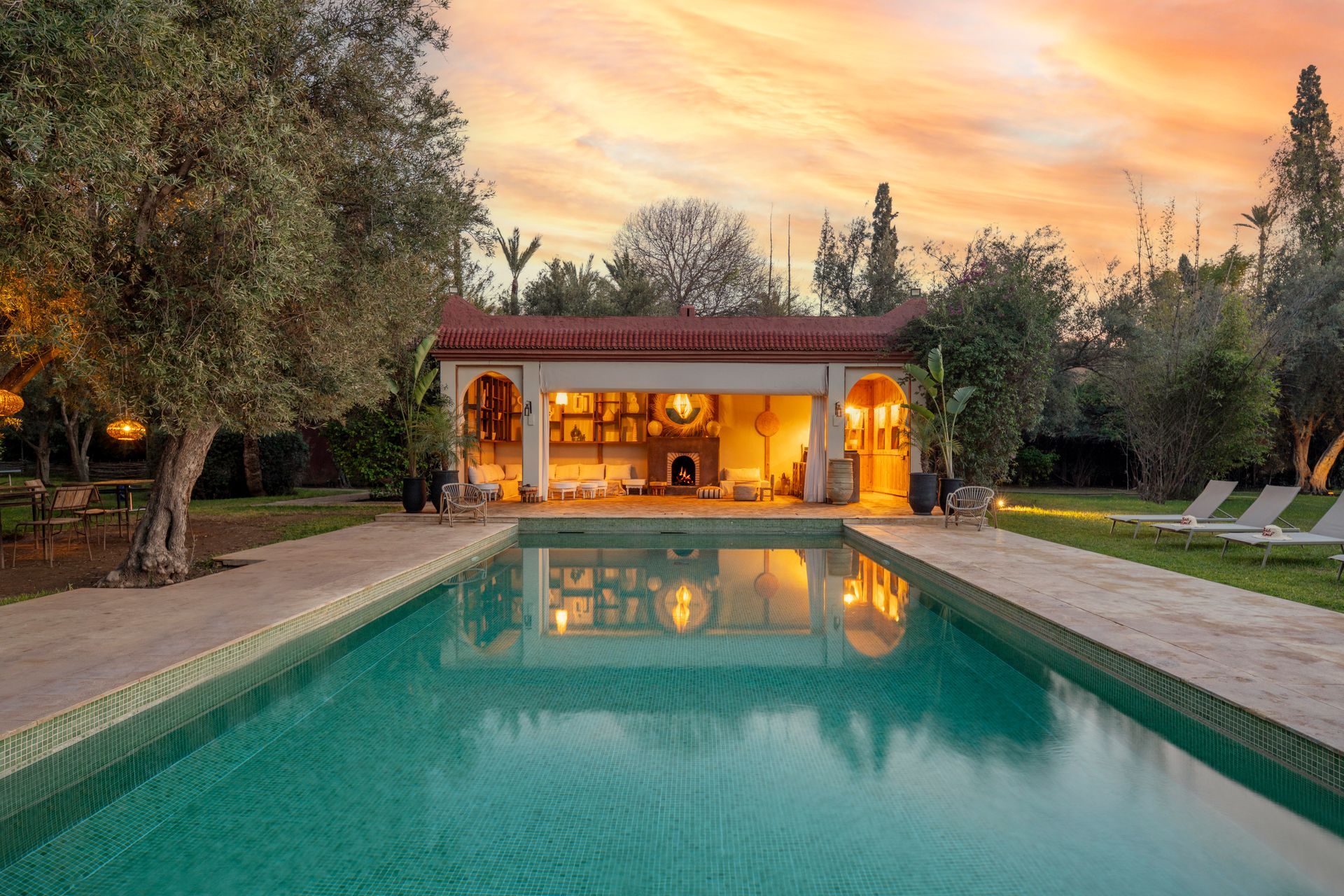
That is even truer for a family or a group. Bab Akoul Medina lets you do everything on foot, which cuts night-time journeys. Bab Akoul Palmeraie and Bab Akoul Atlas are set apart and very quiet, at the cost of car transfers, which we arrange. The villa private-hire guide sets out what a private hire covers, and the Events and stays page lets you write to us directly.
Enquire about a private hire See exclusive offers
In short
Come, and apply one rule: ask the price first. On its own it removes 80 % of the possible unpleasant surprises. Beyond that, Marrakech is a large tourist city like any other, with its habits and its opportunists, and a hospitality that far outweighs both. The three-day Marrakech itinerary shows how to build friction-free days, and the airport and transfers guide covers arrival, which is the most exposed moment.
See Bab Akoul Palmeraie See Bab Akoul Atlas See Bab Akoul Medina
Is Marrakech safe: frequently asked questions
Is Marrakech dangerous for tourists?
No. Violence towards visitors is rare. The common risk is the opportunistic scam: a price quoted afterwards, a fake guide, a taxi with no meter. These cost 20 to 200 dirhams, not physical safety.
Can a woman travel alone in Marrakech?
Yes, and many do. Expect regular verbal approaches in the street, which stop if you do not respond. The useful precautions are avoiding empty alleys after the shops close and taking an ordered taxi home rather than walking late at night.
Can you drink the tap water in Marrakech?
It is treated, but bottled water is the safer choice: digestive discomfort is the most common health problem of the trip.
How do you avoid scams in the souks?
Ask the price before any service, decline once then stop responding, and do not follow anyone claiming your route is closed. For purchases, haggling is the custom: name a price and be willing to walk away.
Should I worry about getting lost in the medina?
Getting lost is normal and harmless by day. Note the name of your derb and a visible landmark, because GPS often loses signal in covered alleys. In the evening, prefer an ordered taxi.
Is Marrakech safe at night?
The busy streets and well-frequented areas are. Avoid empty alleys after midnight and take an ordered taxi rather than walking if your accommodation sits deep in a maze.