There is no dress code for visitors in Marrakech. The useful rule fits in one sentence: cover your shoulders and knees in the medina and you will go unnoticed, which is the actual goal. The second point, more often forgotten, is the temperature swing: thirteen degrees between the afternoon and the evening, nine months of the year.
The rule in three lines
- Medina and souks: shoulders and knees covered. Not as a legal obligation, but because it stops you being treated as a passing tourist.
- Hotel, riad, pool, Gueliz restaurant: whatever you like, swimwear included at the poolside.
- Mosques and religious sites: working mosques are not open to visitors, so the question almost never arises.
Many travellers arrive expecting Marrakech to impose strict dress, and leave having passed Moroccan women in jeans and short dresses in Gueliz. The city is more relaxed than its reputation. The right setting is contextual, not moral.
Discover our three houses Ask about a private hire
What the weather actually dictates
The real subject is not modesty, it is the day-to-night gap. At 460 metres and far from the sea, Marrakech loses thirteen to seventeen degrees between the afternoon and the night.
| Season | Daytime | Evening | What to pack |
|---|---|---|---|
| December-February | 19 to 21 °C | 5 to 8 °C | Coat, jumper, warm socks, closed shoes |
| March-April | 23 to 26 °C | 10 to 12 °C | Layers, a jacket for the evening, light waterproof |
| May-June | 29 to 34 °C | 15 to 18 °C | Light and covering, hat, one layer for the evening |
| July-August | 37 °C and above | 20 to 21 °C | Loose linen or cotton, hat, nothing synthetic |
| September-October | 28 to 32 °C | 15 to 18 °C | Light, plus a thin layer in the evening |
| November | 23 °C | 10 °C | Layers and a light waterproof |
Climate normals for 1991-2020 at the Marrakech station, published by Climates to Travel. The month-by-month detail is in the month-by-month weather guide.
The list that works, in every season
- Loose light trousers: covering, cool, and they go everywhere. More useful than shorts in the medina.
- Two or three sleeved tops in cotton or linen. Synthetics are unbearable above 30 °C.
- A large scarf: shade, dust, shoulders, and it doubles as an emergency towel.
- Proper closed walking shoes. The alleys are uneven, sometimes slippery, and you walk far more than you expect.
- A warm layer, even in summer. June and September nights fall to 15 °C.
- A wide-brimmed hat and high-factor sunscreen: there are eight to eleven hours of sun a day depending on the season.
The mistakes we see every day
Packing only for summer
This is the most frequent error and it spoils the evenings. A terrace at 7 pm in March is at 12 °C. Without a jacket, you will dine indoors every night.
Thin sandals for the medina
The alleys are cobbled, uneven, and shared with handcarts and scooters. A closed shoe is not a luxury, it is what lets you walk six hours without thinking about it.
Synthetics in summer
Above 35 °C, a fabric that does not breathe transforms the day. Cotton, linen, viscose. It is also why traditional dress is loose: it creates air circulation.
Forgetting one smarter outfit
If you are dining somewhere good or invited to an event, a presentable outfit is expected without being formal. A shirt and trousers, a simple dress: that is enough.
And for a wedding or an event?
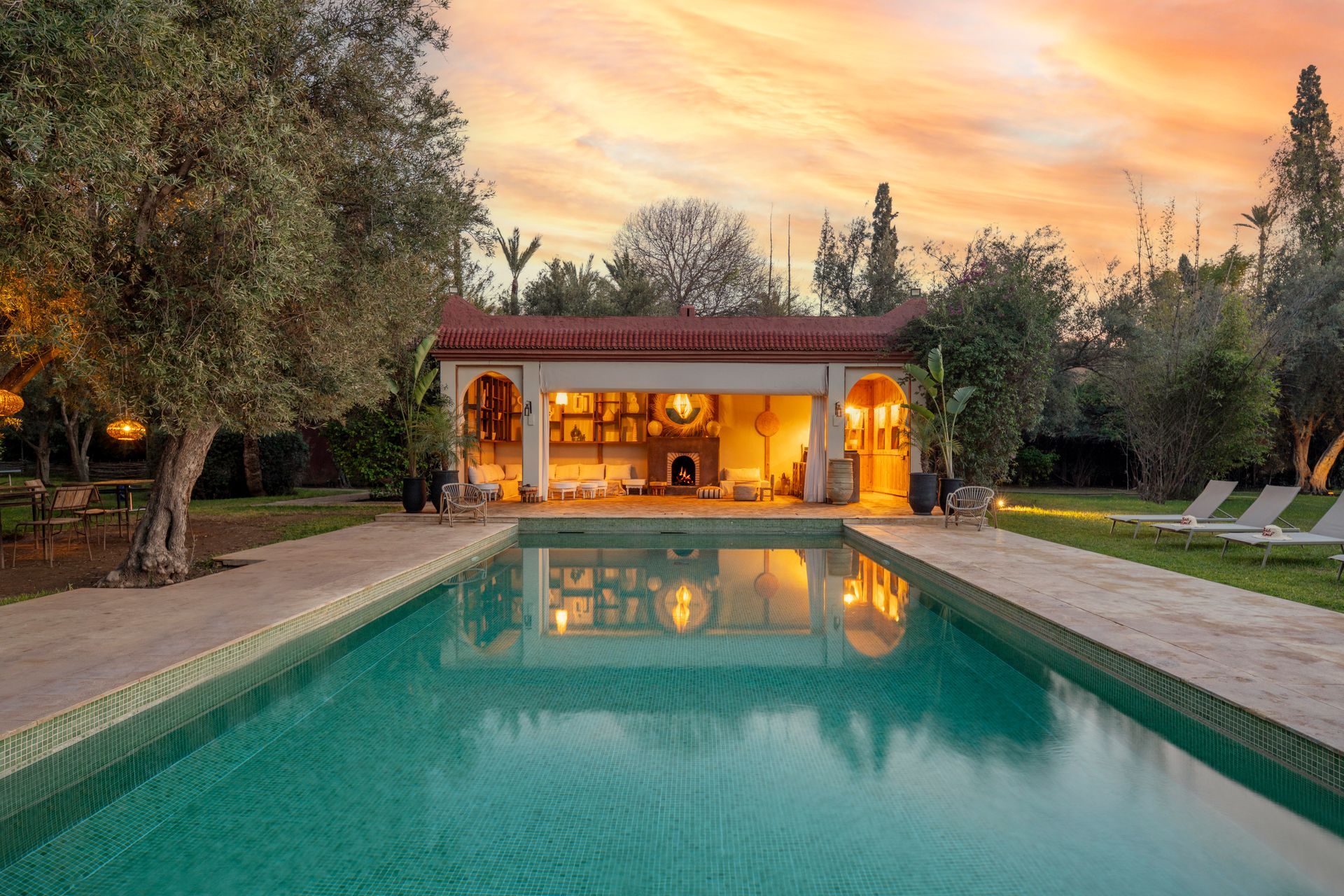
The question changes character: you are in a private house, often around a pool by day and at a table in the evening, and the temperature drops after sunset. The two things to plan for are a warm layer for the evening and shoes that hold on uneven ground or gravel. The villa private-hire guide sets out the typical running order, and the Events and stays page lets you ask us directly.
Enquire about a private hire See exclusive offers
What you do not need to bring
An umbrella, useless in narrow alleys and against brief showers: a light waterproof does better. Fully covering dress, which is required nowhere. And a hairdryer or an exotic adaptor: sockets are European type and good addresses equip the rooms. The Marrakech safety guide and the airport and transfers guide complete the practical preparation.
See Bab Akoul Palmeraie See Bab Akoul Atlas See Bab Akoul Medina
What to wear in Marrakech: frequently asked questions
What should a woman wear in Marrakech?
No requirement applies to visitors. In the medina and the souks, covering shoulders and knees avoids attracting attention. In a riad, at the pool or in Gueliz restaurants, dress is free.
Can you wear shorts in Marrakech?
Yes, legally and practically. But light trousers are more comfortable in the medina and attract markedly fewer approaches. At the poolside the question does not arise.
Do I need to cover my hair in Marrakech?
No, it is required nowhere for visitors. A scarf stays useful against sun and dust, not for propriety.
What shoes should I take to Marrakech?
Closed, comfortable walking shoes: the alleys are cobbled and uneven, and you often walk four to six hours a day. Keep sandals for the pool and the terraces.
Do I need a jumper in Marrakech in summer?
A light layer is useful: June and September nights fall to 14 or 15 °C, twenty degrees below the afternoon. In winter a proper coat is needed.
What should I wear during Ramadan?
The same guidance, with a little more attention during the day: shoulders and knees covered in traditional quarters, and avoid eating, drinking or smoking visibly in the street before the fast is broken.